Understanding Your Pregnancy Timeline
Pregnancy is usually divided into three stages called trimesters. Each trimester represents a different phase of your baby’s development. Our Pregnancy Calculator can help you estimate where you may be in your pregnancy journey based on the information you enter.
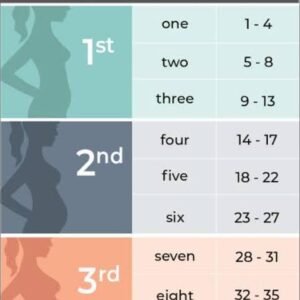
First Trimester: Weeks 1–12
The first trimester covers the early weeks of pregnancy. During this time, important structures and organs begin to develop. Some people experience symptoms such as nausea, tiredness, breast tenderness, or changes in appetite, while others may notice very few symptoms.
If you think you may be pregnant, consider taking a pregnancy test and arranging an appointment with a healthcare professional to discuss your next steps.
Second Trimester: Weeks 13–27
The second trimester is often associated with continued growth and development. Some pregnancy symptoms may become less noticeable, and the pregnancy may become more physically apparent. Depending on the stage of pregnancy, your healthcare professional may recommend routine check-ups and screening tests.
Your estimated pregnancy week can help you understand the general stage of pregnancy, but individual experiences and development can vary.
Third Trimester: Week 28 Until Birth
The third trimester is the final stage of pregnancy. Your baby continues to grow, and your body prepares for delivery. Regular prenatal appointments help your healthcare professional monitor your health and your baby’s development.
The estimated due date is a guide rather than a guaranteed delivery date. It is normal for birth to occur before or after that date.
What Information Do You Need to Calculate Your Due Date?
To use a last menstrual period-based Pregnancy Calculator, you generally need two pieces of information:
The calculator uses these details to estimate your due date and pregnancy timeline. If you have irregular periods, are unsure of your last menstrual period date, or have recently stopped using hormonal contraception, the estimate may be less reliable.
Why Can Your Estimated Due Date Change?
Your estimated due date may change as more information becomes available during pregnancy. The date calculated from your last menstrual period assumes a certain pattern of ovulation and menstrual cycles. However, ovulation does not occur on the same day for everyone.
A healthcare professional may use your medical history and an ultrasound examination to assess the pregnancy and estimate the due date more accurately when appropriate.
Remember that a due date is an estimate, not a deadline. Only a small proportion of babies are born on their exact estimated due date.
Tips for Using Our Pregnancy Calculator
For a more useful estimate, keep these tips in mind:
Enter the correct first day of your last menstrual period.
Use your usual menstrual cycle length rather than automatically assuming every cycle is 28 days.
Treat the results as an estimate, especially if your periods are irregular.
Keep up with recommended prenatal appointments and discuss any concerns with your healthcare professional.
Recheck your dates if you discover that the original information you entered was incorrect.
Our free online Pregnancy Calculator is designed to provide a convenient starting point for understanding estimated pregnancy dates and milestones.
When Should You Contact a Healthcare Professional?
A pregnancy calculator cannot confirm whether you are pregnant or assess the health of a pregnancy. If you suspect you are pregnant, a pregnancy test and professional medical guidance can help you understand the next steps.
Seek urgent medical attention if you experience severe abdominal pain, heavy bleeding, fainting, or other symptoms that concern you. During an established pregnancy, contact your maternity care team promptly if you notice a significant reduction in your baby’s usual movements.
Start Estimating Your Pregnancy Dates
Use our free Pregnancy Calculator to estimate your due date, pregnancy weeks, and general pregnancy timeline. Enter your details to receive an estimate in seconds, then discuss your dates and prenatal care with a qualified healthcare professional.
Important: This tool provides general information and estimates only. It does not diagnose pregnancy, assess fetal development, or replace professional medical advice.